ICC T20 World Cup 2026 · Match 41 · Super 8 Group 2 · Retrospective
Pakistan vs New Zealand at Colombo: Super 8 opener fantasy reads from the 2026 T20 World Cup

Pakistan and New Zealand opened Super 8 Group 2 of the 2026 ICC T20 World Cup on Saturday, 21 February 2026, at R. Premadasa Stadium, Colombo, with the first ball scheduled for 7:00 pm IST. The fixture carried the official designation of Match 41 and was the first knockout-stage outing for both sides after Pakistan qualified from Group A behind India and New Zealand progressed from Group D behind South Africa. The published fantasy combination opened with a Pakistan-favoured prediction and a captaincy pair that took the seam-friendly first quarter and the spin-friendly middle phase at face value.
This retrospective reads the published probable XIs, the venue brief and the suggested fantasy combination back into the Super 8 opening window. Both teams arrived in Colombo with settled bowling identities and a clear spin pillar. Pakistan had three frontline spinners in the published XI; New Zealand had Santner at seven with Sodhi at nine. The published read placed Pakistan slightly ahead because the published analysis judged their spin depth a step ahead of New Zealand’s. The role table, the captaincy pair and the match-facts grid that follow trace how that read was constructed, not how the match itself was decided on the night.
What the Super 8 opener carried into Colombo
The published source piece framed the match as the first Super 8 outing for both teams and a Group 2 confidence booster rather than a must-win fixture. Group 2 also includes England and Sri Lanka, which means a loss in Match 41 did not end either campaign. That framing changes the captaincy calculation: managers were not forced into ultra-consensus reads, but they could also not afford a low-floor differential punt that burned an already short Super 8 slate. Pakistan arrived on the back of a Group A campaign that ended one place behind India; New Zealand arrived after South Africa pipped them to the Group D summit. Both sides had already played at least four matches at the World Cup and arrived with form and surface reads intact.
Across all T20 internationals, the published source recorded 49 matches between the two sides — New Zealand 23 wins, Pakistan 24 wins and 2 no results. At T20 World Cups specifically, the ledger read New Zealand 2 wins, Pakistan 5 wins. The World Cup-specific record was the more relevant number for a knockout-stage fantasy build because Super 8 cricket in Sri Lanka carries a different pressure profile than bilateral cricket, and the recent World Cup sample is small enough that any trend reads more like a venue-and-squad signal than a structural one. Pakistan had won more often at World Cups; New Zealand’s recent bilateral form had been slightly ahead.
The published source named Finn Allen as the New Zealand player to watch on the strength of his BBL 2025-26 form. The published scores in the World Cup so far read 1 against Afghanistan, an unbeaten 84 against the UAE, then 31 and 21 in subsequent games. That profile is the classic opening-batter volatility curve — one flat score, one ceiling score, then two medium scores. Managers deciding between Allen and Tim Seifert at the top of the New Zealand stack were weighing Seifert’s keeping-bonus path against Allen’s ceiling when the powerplay offered pace on the ball. The published fantasy combination sided with Seifert as captain because the published pairing explicitly opened with Tim Seifert captain and Sahibzada Farhan vice-captain.
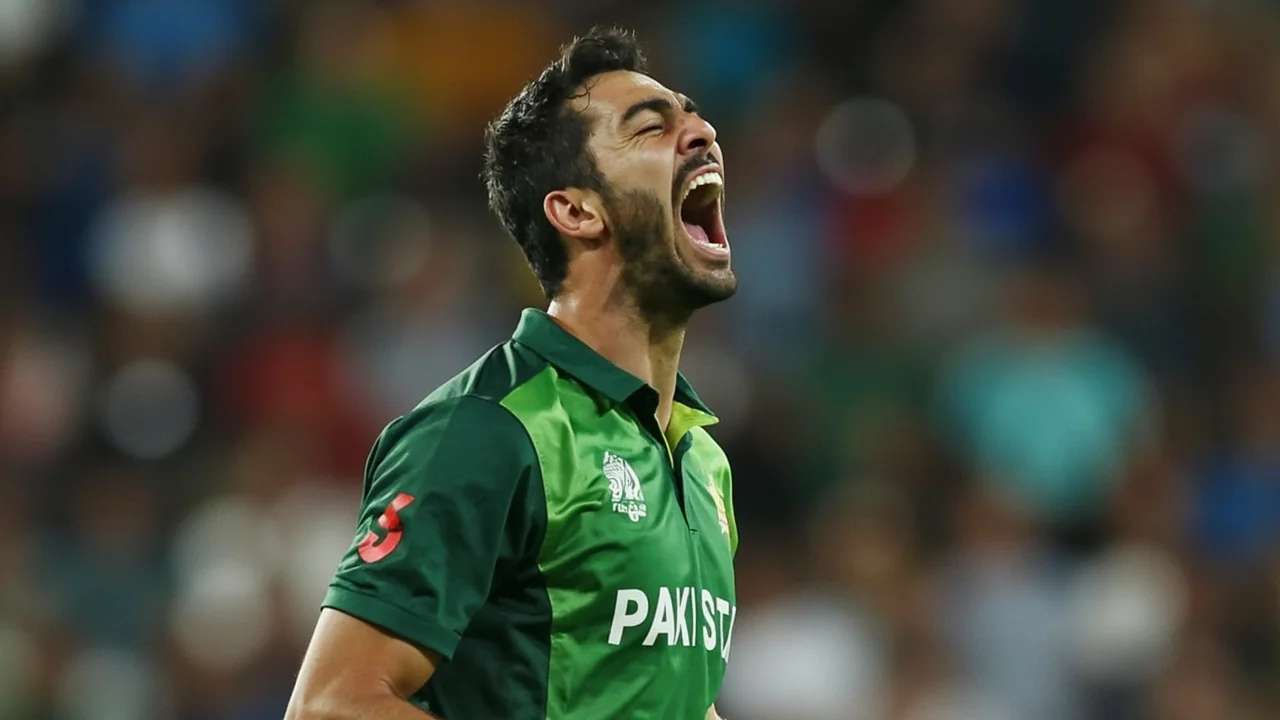
The published probable XIs
New Zealand’s published probable eleven read Finn Allen, Tim Seifert (wk), Rachin Ravindra, Daryl Mitchell, Glenn Phillips, Mark Chapman, Mitchell Santner (c), James Neesham, Ish Sodhi, Jacob Duffy, Matt Henry. Santner at seven and Phillips at five reflect the published brief that New Zealand would front-load the seam attack — Duffy and Henry at ten and eleven — with Sodhi as the lone specialist spinner and Santner as the spin-bowling all-rounder pivot. Neesham at eight carries the death-overs seam brief alongside Duffy and Henry.
Pakistan’s published probable eleven read Sahibzada Farhan, Saim Ayub, Salman Ali Agha (c), Babar Azam, Usman Khan (wk), Shadab Khan, Mohammad Nawaz, Faheem Ashraf, Shaheen Afridi, Abrar Ahmed, Usman Tariq. The published analysis noted Farhan’s standing as the leading run-scorer of the 2026 T20 World Cup with a recent century against Namibia, Babar’s batting position at number four with strike-rate scrutiny, and Saim Ayub’s contribution of five wickets from four matches. Pakistan’s spin depth is the structural read: Nawaz at seven, Shadab at six and Abrar at ten means three frontline spinners in the XI, with Nawaz the seam-bowling all-rounder pivot and Faheem Ashraf at eight carrying the seam-bowling all-rounder role.
New Zealand (probable)
- Finn Allen
- Tim Seifert (wk)
- Rachin Ravindra
- Daryl Mitchell
- Glenn Phillips
- Mark Chapman
- Mitchell Santner (c)
- James Neesham
- Ish Sodhi
- Jacob Duffy
- Matt Henry
Pakistan (probable)
- Sahibzada Farhan
- Saim Ayub
- Salman Ali Agha (c)
- Babar Azam
- Usman Khan (wk)
- Shadab Khan
- Mohammad Nawaz
- Faheem Ashraf
- Shaheen Afridi
- Abrar Ahmed
- Usman Tariq
The numerical milestones in the build-up
The published source flagged four career milestones that turned ordinary picks into named narrative picks. For New Zealand, Mitchell Santner carried 136 wickets from 130 matches heading into the fixture; Ish Sodhi needed three more scalps to become New Zealand’s highest-ever wicket-taker, having reached 162; Jacob Duffy owned 62 T20I wickets from 47 matches; Matt Henry held 47 wickets from 38 T20Is. For Pakistan, Mohammad Nawaz sat three T20I wickets short of 100 on 97 and two sixes short of 50; Abrar Ahmed needed one more wicket for 50 T20I scalps and held three wickets from the 2026 World Cup so far.
Milestones matter for fantasy because they shape role clarity in the middle phase. A bowler who is one wicket from a round number gets the captain’s trust for a fourth-over spell; an all-rounder who is one six from a fifty gets a step-out moment at the death if the chase is live. The published captaincy pair built around this read: Sodhi’s milestone at nine made him a credible vice-captain pick for owners who needed spin overs; Nawaz’s milestone at seven made him a credible differential captain for owners willing to back Pakistan’s spin depth over Pakistan’s seam. Neither pick was a forced read — they were milestone-aware reads inside an otherwise standard Super 8 opener.
Two additional context numbers also mattered. Farhan’s tournament-leading run aggregate going into the Super 8s made him the highest-ceiling fantasy pick in the Pakistan stack even with Babar at four and Saim Ayub opening. Allen’s BBL 2025-26 form made him the highest-ceiling fantasy pick in the New Zealand stack even with Seifert keeping and Santner captain. Owners who build their XI around ceiling rather than form had a clean Pakistan or New Zealand top-order captaincy band; owners who build around role security had to pick one Allen or Farhan rather than both.
R. Premadasa at 7:00 pm IST
The published pitch note described R. Premadasa as offering a flat black-soil surface early that favours spinners as the match progresses, with minimal seam or swing under day-night conditions. Both teams were expected to load up on spin options, and Pakistan’s published XI did so with three frontline spinners. New Zealand loaded with two specialist seamers at the death (Duffy and Henry), one specialist spinner at nine (Sodhi) and the captain as the spin-bowling all-rounder at seven. The seam-versus-spin balance therefore differed even if the surface read was shared.
For managers, the surface read translated into three practical moves. First, the captaincy pair needed to catch the seam-friendly first quarter as well as the spin-friendly middle phase, which is why the published combination placed Seifert captain with the New Zealand powerplay brief and Farhan vice-captain with the Pakistan powerplay brief. Second, the death-overs spin option mattered more than the new-ball spin option — Nawaz at seven and Shadab at six for Pakistan, Santner at seven for New Zealand. Third, the keeper-bonus path through Seifert overlapped with the captaincy path because the published combination opened with Seifert as captain, which means owners collected the multiplier and the dismissal bonus through the same player.
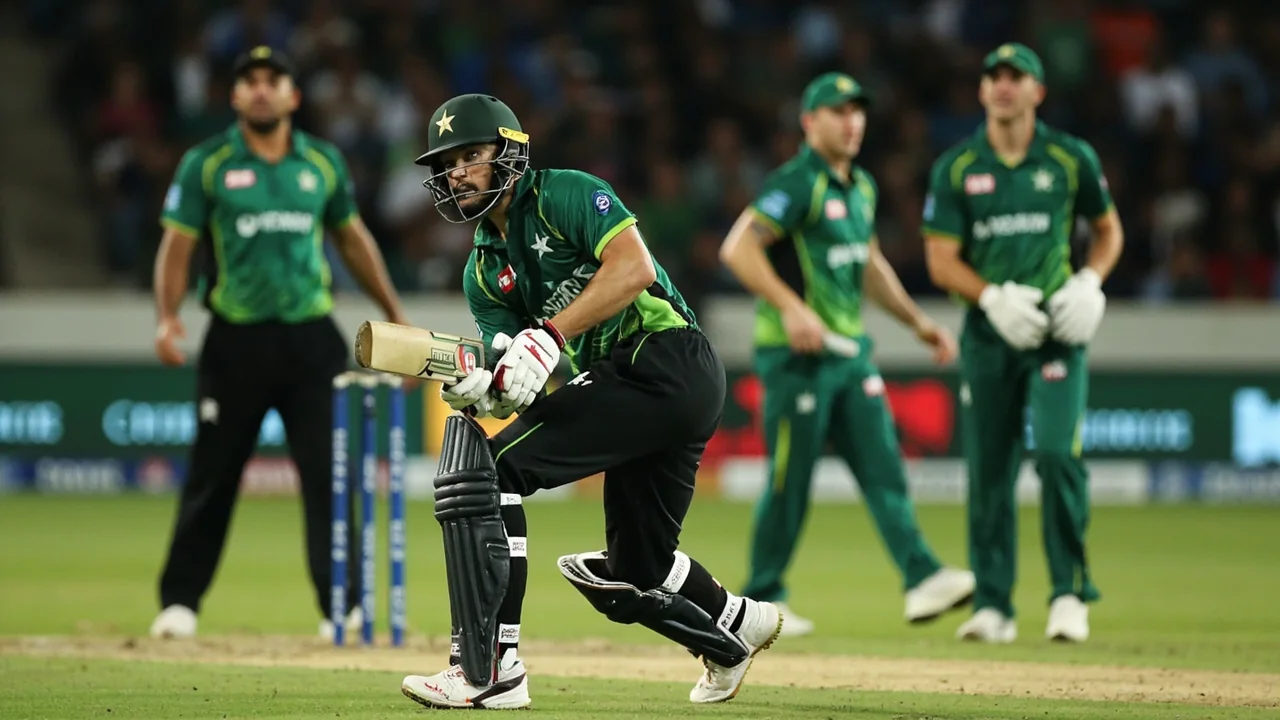
Captain, vice-captain and the role table
The published source offered two captaincy combinations. Option A paired Tim Seifert captain with Sahibzada Farhan vice-captain, taking the New Zealand powerplay keeper-bonus path alongside the Pakistan opening-batter ceiling path. Option B paired Finn Allen captain with Abrar Ahmed vice-captain, taking the New Zealand powerplay ceiling path alongside the Pakistan spin-wicket path. Both combinations are defensible; the published analysis opened with Option A as the safer Super 8 opener build and flagged Option B as the differential grand-league lever.
The role table the published combination opened with read as follows. Batters: Sahibzada Farhan, Babar Azam, Tim Seifert, Rachin Ravindra, Mark Chapman, and Ishan Kishan as a differential — the published piece noted Ishan Kishan specifically as a differential option rather than a probable XI pick, so owners reading the table should treat Kishan as a tournament-wide lever rather than a Match 41 lock. All-rounders: Mitchell Santner and Shadab Khan. Bowlers: Shaheen Afridi, Abrar Ahmed, Usman Tariq. The published combination therefore stacked three Pakistan batters, three New Zealand batters, two all-rounders from opposite sides and three Pakistan bowlers, with the New Zealand bowling load carried by Santner the all-rounder.
| Role band | Named picks | Fantasy note |
|---|---|---|
| Batters | S. Farhan, B. Azam, T. Seifert, R. Ravindra, M. Chapman, I. Kishan (diff) | Powerplay ceiling before the surface grips |
| All-rounders | M. Santner, S. Khan | Multi-point middle-phase stack |
| Bowlers | S. Afridi, A. Ahmed, U. Tariq | Pakistan spin-and-seam wicket share |
| Wicketkeepers | T. Seifert | Bonus on dismissals; captaincy overlap |
| C / VC (Option A) | T. Seifert / S. Farhan | New Zealand powerplay + Pakistan powerplay |
| C / VC (Option B) | F. Allen / A. Ahmed | Powerplay ceiling + spin-wicket differential |
How the role table mapped to the Super 8 opener
The Pakistan spin stack is the structural advantage the published read attached to Pakistan. With Nawaz at seven, Shadab at six and Abrar at ten, Pakistan could pivot from a seam-first powerplay through Shaheen Afridi at nine to a spin-first middle phase without rebuilding the side. New Zealand’s combination required Santner to bowl four overs across the middle phase to keep the spin footprint honest; the published combination reflected that by listing Santner as the only New Zealand name in the all-rounder row. If Santner’s overs were restricted by injury or by a longer powerplay for the captain, Sodhi became the de facto sole specialist spinner, which is why the published combination kept him as a named pick in the bowling table even though his fantasy ceiling is below the Pakistan trio.
The keeper-bonus path through Seifert is the cleanest single-player stack in the published build. Seifert catches the powerplay with the bat and adds a keeping-bonus path on dismissals, which lines up with New Zealand’s seam-attack identity through Duffy and Henry. The published combination opened with Seifert as captain, which means owners stacked the multiplier and the keeping-bonus through the same name rather than splitting them. The trade-off is that the multiplier was on a New Zealand keeper rather than on a Pakistan top-order batter, which traded some ceiling for a more diversified ownership profile.
The differential read inside the published combination was Ishan Kishan. He does not appear in either published probable XI; the published piece flagged him as a tournament-wide differential lever, not a Match 41 lock. Owners who pulled Kishan into their Super 8 opener XI were making a squad-shape call rather than a Match 41 call — the upside is a multi-point ceiling at the top of the order for any India match later in the tournament, and the downside is a probable non-playing slot for Match 41 itself. That is the published combination’s clearest grand-league lever and its clearest small-league trap.
What the published read did and did not claim
The published combination was explicit about what it claimed: a Pakistan-favoured prediction on the basis that the Pakistan spin depth sits a step ahead of New Zealand’s. It was equally explicit about what it did not claim: it did not name a winner with certainty, it did not predict a specific margin, it did not promise a specific points ceiling for the captaincy pair, and it did not extrapolate the Super 8 opener into the rest of the Group 2 campaign. A published combination that opens with a Pakistan-favoured read and offers a captaincy pair rather than a captaincy lock is a research brief, not a forecast.
The numbers behind the read are also worth restating. Across 49 T20 internationals the ledger sits at New Zealand 23, Pakistan 24, 2 no results — effectively a coin flip. At T20 World Cups specifically, the ledger reads New Zealand 2, Pakistan 5 — a meaningful tilt. The published combination leaned on the World Cup-specific sample because the venue, the format and the Super 8 pressure profile all aligned with that sample, not with the broader T20I ledger. That is a defensible methodology choice and the kind of choice the lab’s captaincy matrix documents in full.
What to watch next in Super 8 Group 2
The immediate checkpoint after Match 41 is the rest of the Group 2 schedule. England and Sri Lanka are the other two sides in Group 2, and the published combination does not extend into either of those fixtures. The next manager checkpoint is the England-leg read: does the New Zealand seam attack hold up at a venue that historically favours swing? Does the Pakistan spin trio travel to a venue that historically favours finger spin over wrist spin? Those are surface reads for the next lab note, not for Match 41.